From the field
How to detect aflatoxin?
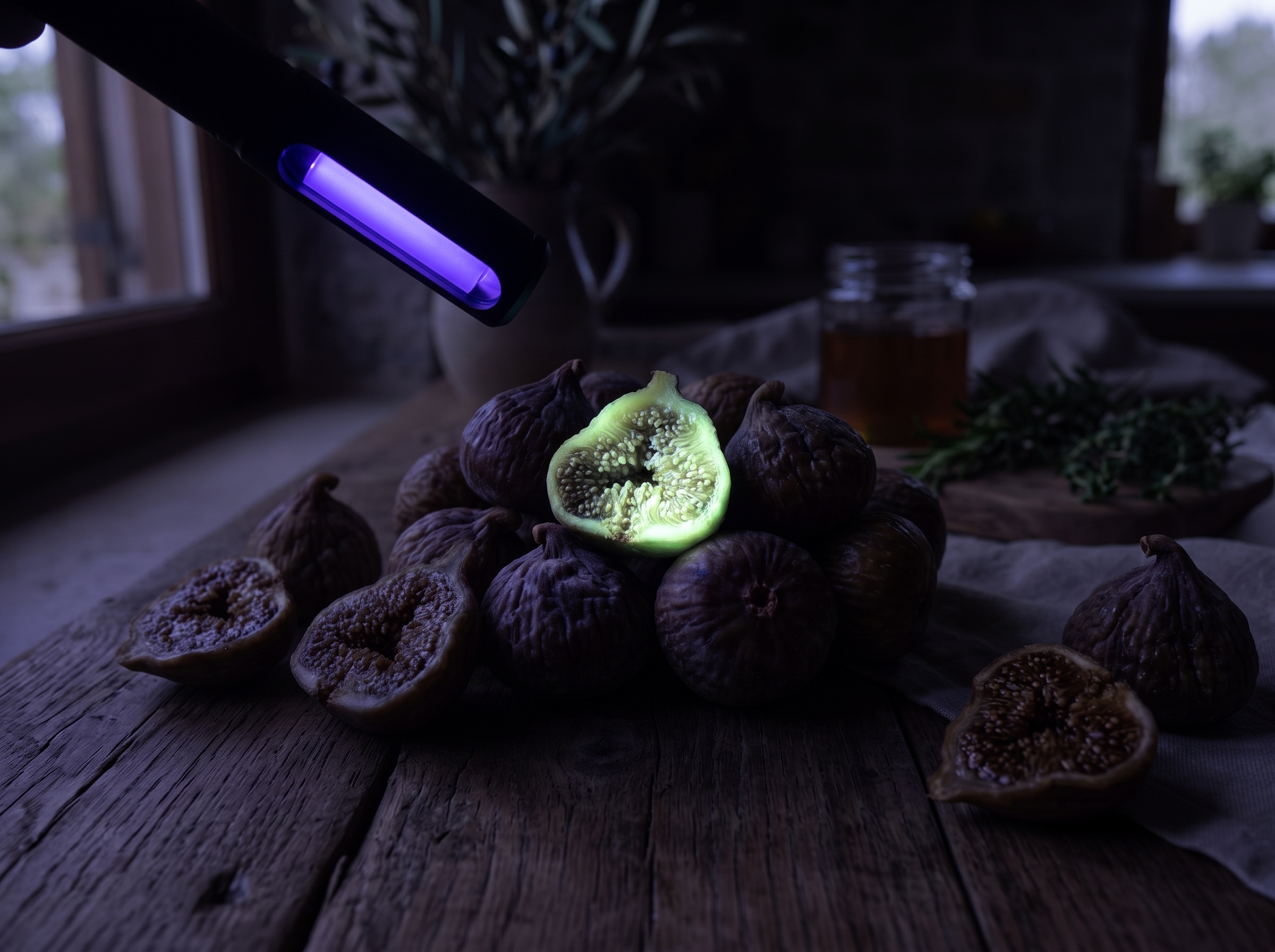
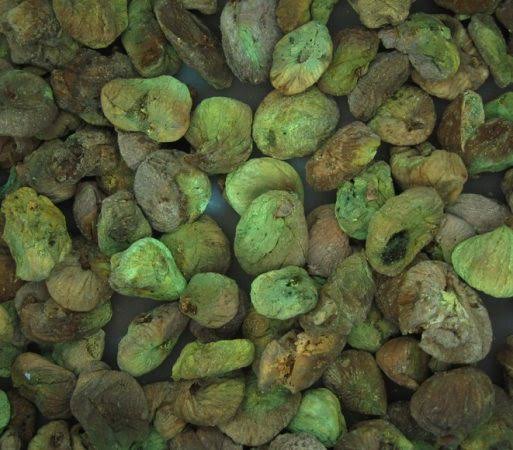
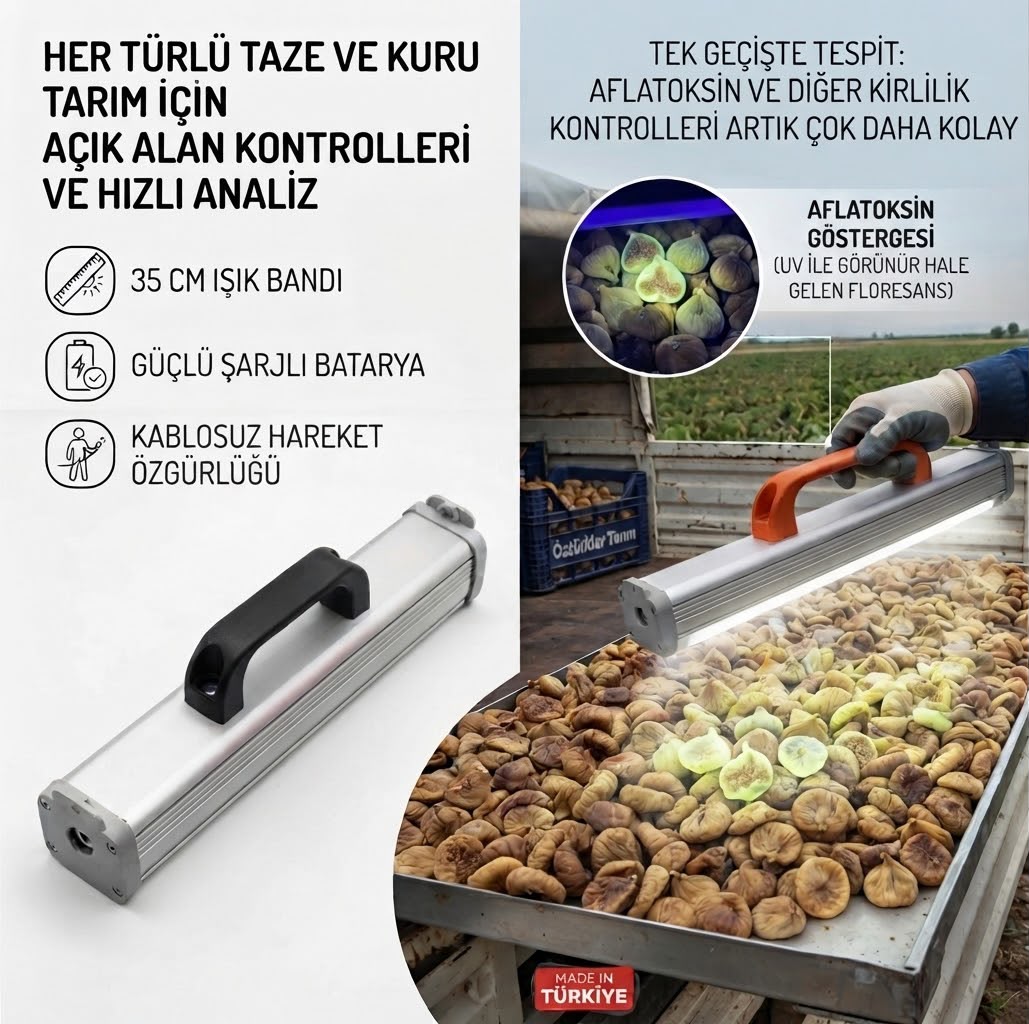
Aflatoxin cannot be detected by sight, smell or taste; it is colourless and odourless. Only an accredited laboratory can measure the exact amount. In the field, kernels that glow greenish-yellow under 365 nm UV-A light are set aside at once as suspicious kernels that may contain aflatoxin.
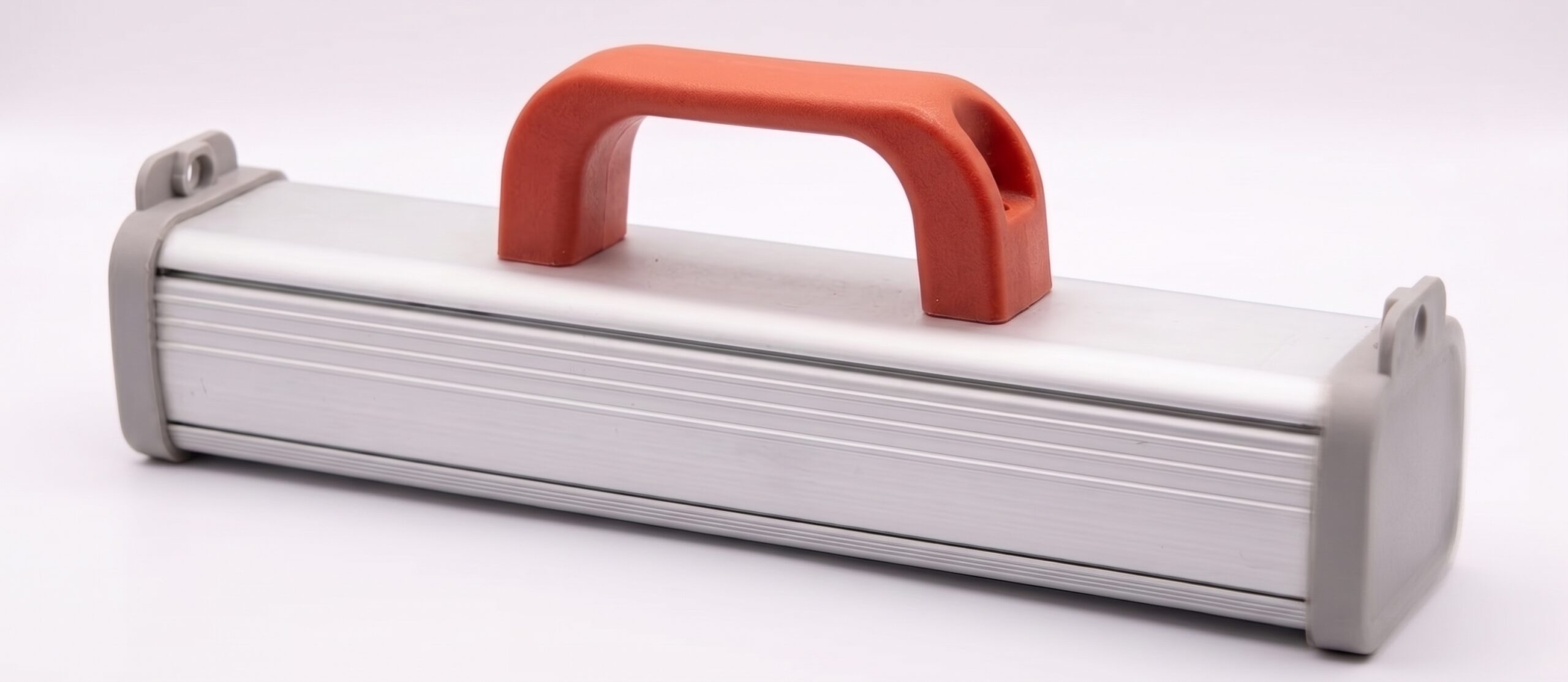
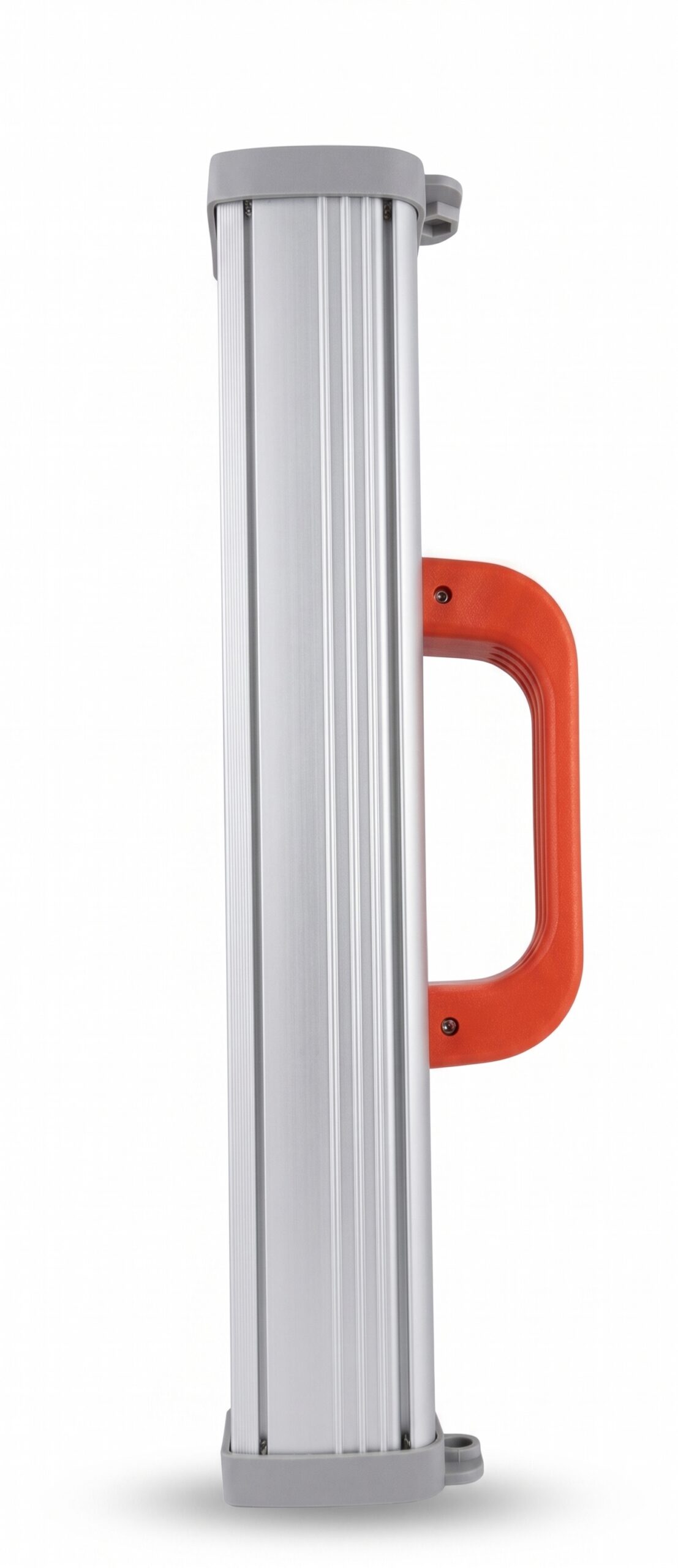
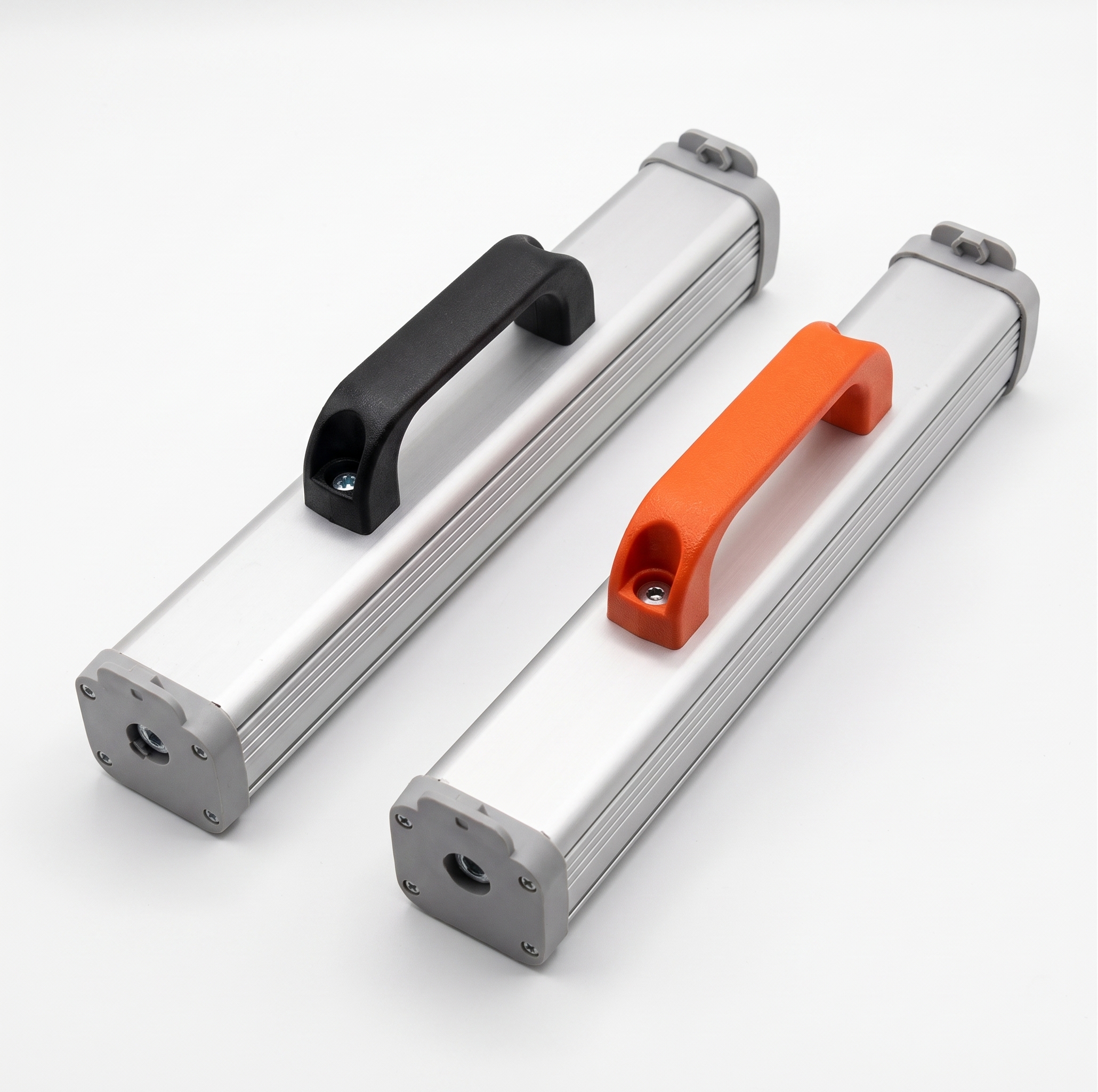
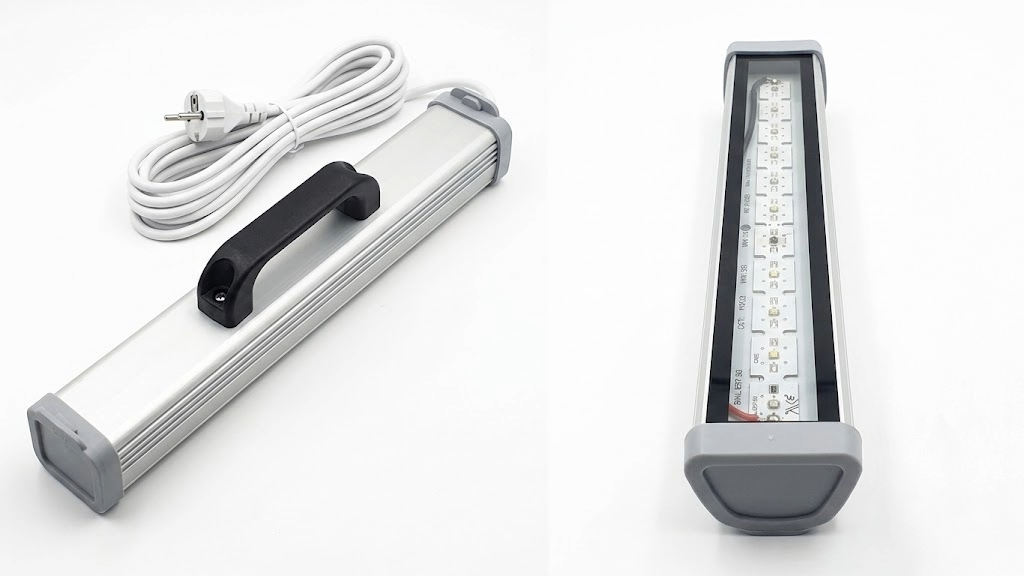
This is the check we recommend to our customers: when purchased figs arrive at the facility, while they are still at the warehouse entrance at the goods reception point, the lot is inspected with the 35 cm rechargeable AFLALED. The lamp is hand-held, has 12 LEDs and runs for 3 hours continuously. Suspicious kernels are noticed before they enter the warehouse.
The glow is clearest in the dark. Because AFLALED produces 365 nm light directly with LEDs, you can inspect both in a dark room and in daylight. That is why it is also used in truck beds, in front of warehouses and in orchards.
Sorting under UV light is a pre-sorting step. A laboratory result shows whether the lot is fit for sale or export.
Source: AltayShop field applications, Izmir, 2026.
How to detect aflatoxin in hazelnuts and walnuts?
In hazelnuts and walnuts, too, aflatoxin cannot be seen from the outside. A mouldy or discoloured kernel is a warning sign, but a clean-looking kernel can also be contaminated. In the field, the first screening is done with 365 nm UV-A light; the definitive result comes from laboratory analysis.
AFLALED was developed for dried figs. With the same 365 nm light it is also used to set aside suspicious kernels that may contain aflatoxin in pistachios, hazelnuts, walnuts and peanuts. For in-shell products, the check is done on the shelled kernel.
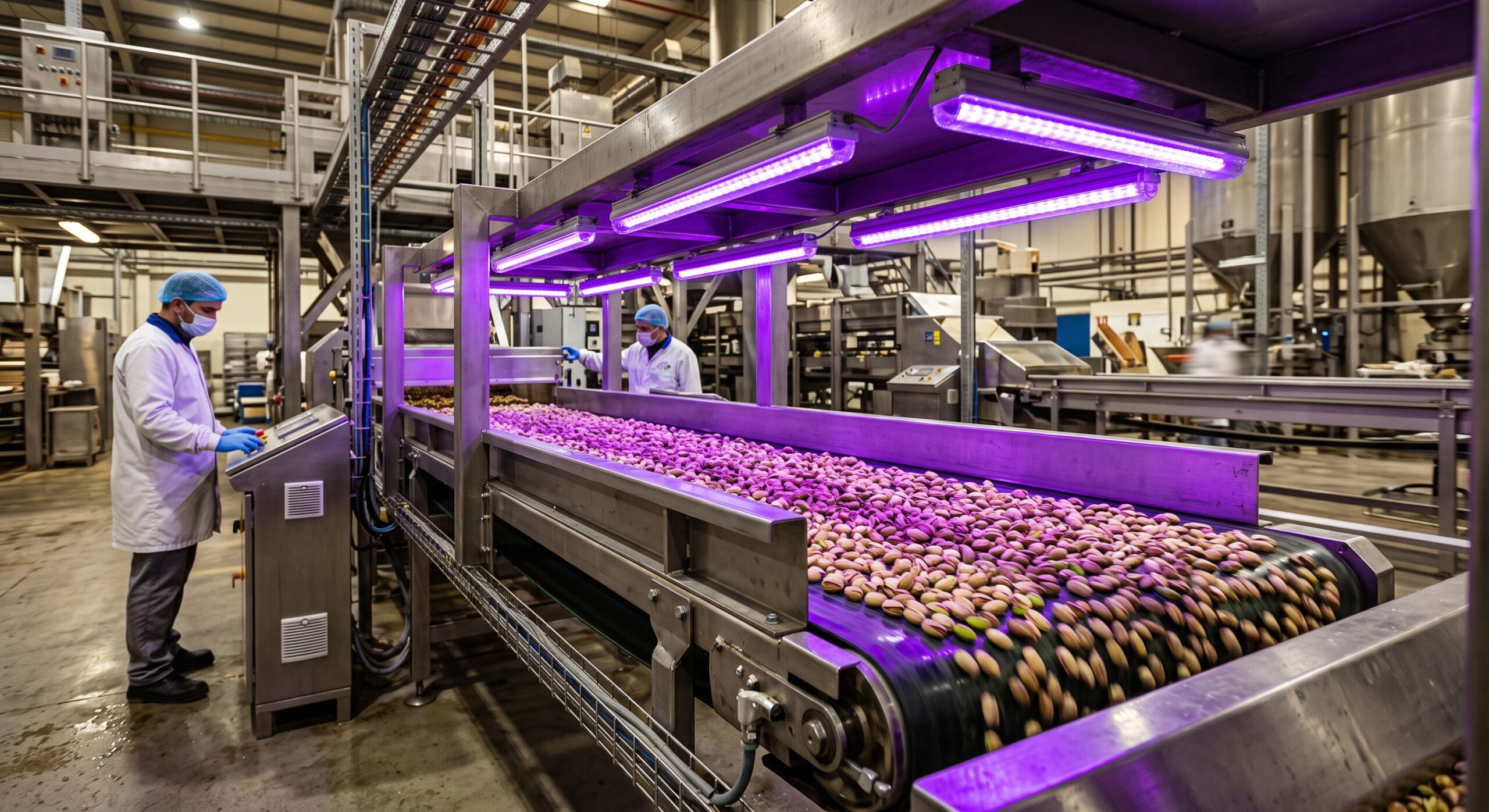
Rechargeable 20 cm and 35 cm models are used hand-held in warehouses and in the field. On a production line, the 96 cm belt model is mounted above the sorting belt. Six or seven lamps are added one after another on a 6 or 7 metre belt, and a double row is possible depending on belt width.
Source: AltayShop field applications, Izmir, 2026.
How to detect aflatoxin in almonds?
In almonds the sign is different from figs. Under 365 nm UV-A light, almonds that may contain aflatoxin glow violet-purple. The greenish-yellow glow used for figs and pistachios is not an aflatoxin sign in almonds.
This is based on an almond study by US Department of Agriculture researchers. Under long-wave UV light, aflatoxin-contaminated almond kernels showed a violet-purple fluorescence, while kernels with a bright yellow fluorescence showed no aflatoxin.
Because AFLALED emits the same 365 nm light, it can also be used for pre-sorting almonds. Set aside the kernels that glow violet-purple and always confirm the result with a laboratory.
Source: US Patent 4,535,248, "Method for detecting aflatoxin in almonds", US Department of Agriculture, 1985.
Aflatoxin test or UV lamp?
They do different jobs and do not replace each other. A laboratory test measures the amount of aflatoxin in a sample and gives an official result. A UV lamp lets you look at every kernel in the lot and set aside suspicious kernels that may contain aflatoxin. An aflatoxin test is done in the laboratory with methods such as HPLC or ELISA and gives the result in ppb (parts per billion).
Only a small sample of the lot goes to the laboratory. If there are a few suspicious kernels in the lot, they may not end up in the sample. That is why facilities first sort out suspicious kernels under UV light and then send a sample. The laboratory result becomes more reliable, and suspicious kernels leave the lot early.
Let us decide together at which stage and with which model you should inspect: 📱 +90 532 233 42 81 (WhatsApp) · 📞 +90 232 449 20 58
Source: AltayShop field applications, Izmir, 2026.
Can you check for aflatoxin in daylight?
Yes, with AFLALED you can. Old fluorescent UV tubes are weak, so suspect kernels could only be seen glowing in a dark room. AFLALED produces 365 nm light directly with powerful LEDs, giving 12 mW/cm² at 30 cm. That is why suspect dried figs that may carry aflatoxin glow greenish-yellow even outdoors, in front of a warehouse or in the drying yard, in daylight.
Our video was filmed in daylight in front of a warehouse: AFLALED checking dried figs in daylight.
The glow is clearest in the dark. For detailed sorting a dark room or a shaded area is preferred; in daylight you can do quick checks. You can work in a dark room and in bright conditions alike. UV sorting is a pre-sorting step; the final result always comes from the laboratory.
Source: AltayShop field recording, İzmir, October 2026.
How is a UV lamp used on a dried fig sorting belt?
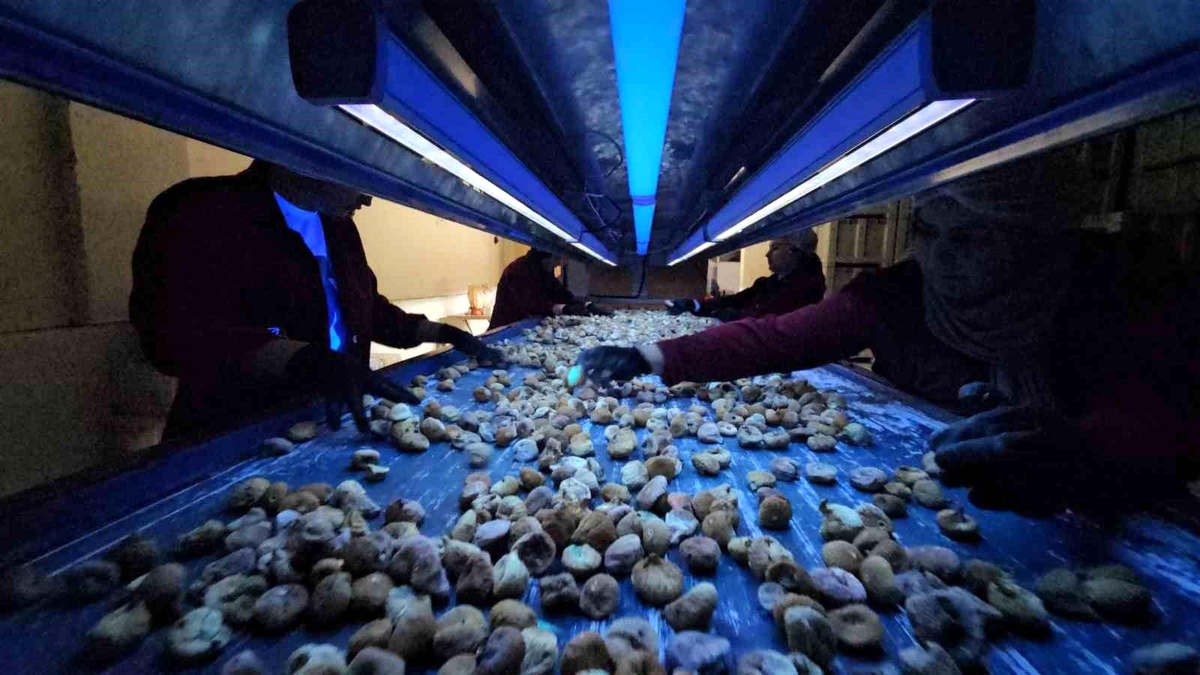
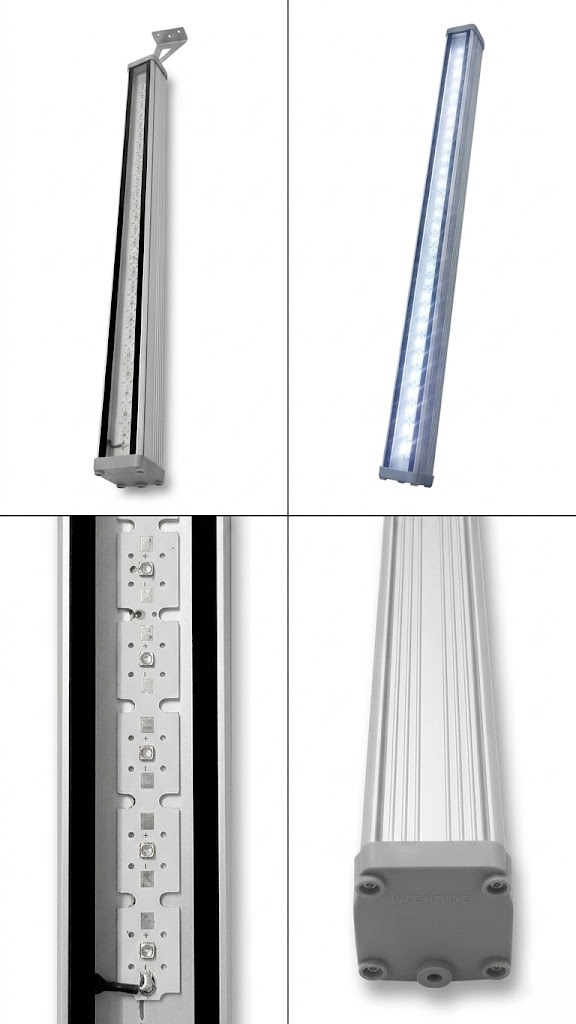
On sorting belts the AFLALED belt model is used. Each lamp is 100 cm (1 m) long, mounted 20-40 cm above the belt and runs continuously on 110-220 V. Lamps are added end to end to match the length of your belt; on wide belts they are installed in two rows. The wide-beam (120°) model covers the whole belt, the narrow-beam (60°) model concentrates the light on one strip for higher intensity.
As the figs move along the belt, sorters pick out the kernels that glow bright greenish-yellow by hand. The Codex code of practice for dried figs also recommends screening every incoming lot under long-wave UV light and removing the fluorescent figs. Removed figs are destroyed so that they cannot re-enter the food chain.
If the sorting belt is set up in a dark section or covered, the glow is easier to see.
Source: Codex Alimentarius, Code of Practice for the Prevention and Reduction of Aflatoxin Contamination in Dried Figs (CAC/RCP 65-2008).
What is the difference between a 365 nm UV flashlight and AFLALED?
Both can emit 365 nm light, but the workload is different. A flashlight focuses its light on one spot, so you inspect a palm-sized area at a time. AFLALED is a straight light bar 20 cm, 35 cm or 100 cm long. It lights a whole strip of a crate, tray or belt evenly in one pass, so far more kernels are checked in the same time.
Check the wavelength when buying. Many products sold as "UV flashlights" are 395 nm. That light also emits visible violet light, which drowns out the glow of suspect kernels. Long-wave UV used for aflatoxin pre-sorting is around 365 nm. AFLALED uses 365 nm ± 5 nm LEDs in an aluminium body with IP65 water and dust protection.
Source: FAO, mycotoxin screening methods; AFLALED technical data sheet.
What is a UV-A lamp, and why is 365 nm used for dried figs?
UV-A is long-wave ultraviolet light between 315 and 400 nm, also known as "black light". It is part of sunlight and far less harmful than UV-B and UV-C.
Where the aflatoxin-producing mould (Aspergillus flavus) grows on dried figs, it leaves kojic acid behind. Combined with the fruit's own enzyme, this substance glows greenish-yellow under long-wave UV light. The method is called BGYF (bright greenish-yellow fluorescence). The Codex code for dried figs and agricultural screening methods use long-wave UV around 360-365 nm for this work. AFLALED emits exactly this wavelength.
The glow itself is not aflatoxin; it is a trace of the mould. That is why UV sorting is a pre-sorting step; the final result always comes from the laboratory.
Source: Codex Alimentarius CAC/RCP 65-2008; Iowa State University, black light presumptive test (AACC 45-15).